
Vintage S-Guard Fighting Knife Possible WWI German Grabendolch Wood Grip
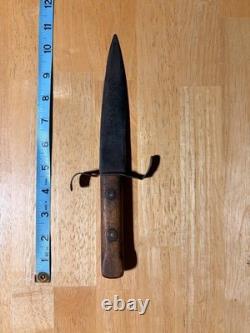
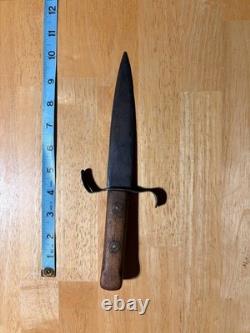
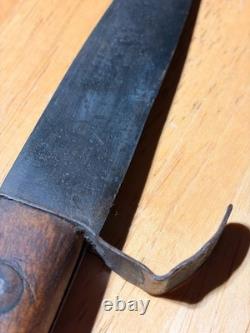
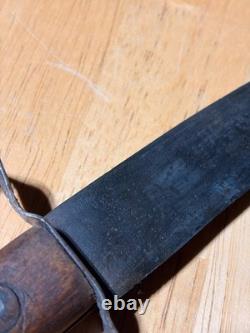
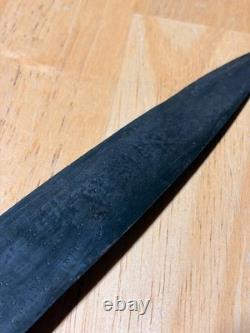
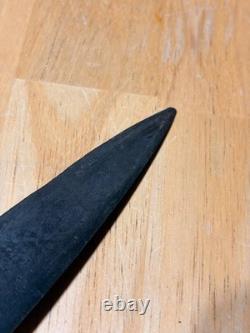
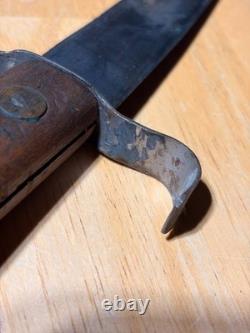
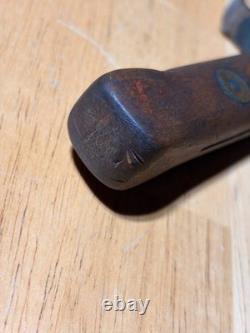
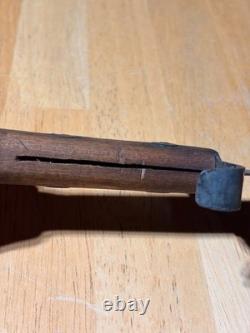
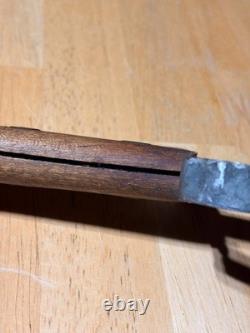

Offered is an unusual vintage fixed-blade fighting or utility knife featuring a single-edged steel blade, wood slab grips, two large grip fasteners, full-tang construction and a distinctive swept S-shaped steel crossguard. The WWI German attribution has NOT been conclusively proven. This individual knife does not display a visible. Documented veteran or battlefield provenance. For that reason, this listing does NOT represent or guarantee this knife as a definitively authenticated Imperial German WWI trench knife.
Buyers should review the photographs and make their own determination regarding exact origin, age and attribution. German soldiers during World War I used a wide variety of close-combat knives generally described today as Grabendolch, Nahkampfmesser or trench fighting knives.
Two or more grip fasteners. The construction of this knife shares several of those characteristics. However, similar fighting and hunting knives continued to be produced before and after World War I, so those similarities alone cannot establish an exact manufacturing date or military history.
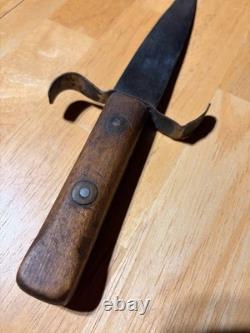
Broad spear / utility-fighting blade profile. Two large rivet / washer-style grip fasteners. Distinctive hand-formed S-shaped steel crossguard. No visible factory or military markings.
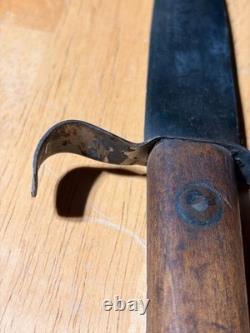
The guard has pronounced swept quillons, one curving forward and the opposite side curving rearward. The knife has an intentionally simple, utilitarian construction consistent with a fighting or heavy utility knife. If additional faint markings are present beneath the existing patina, they have not been exposed or enhanced.
The knife has NOT been polished or aggressively cleaned to search for markings. No scabbard or sheath is included. Only the knife shown in the photographs is included in this listing. Original used vintage / antique condition.The knife shows substantial age, wear and storage/use characteristics including. Patina and oxidation to the steel guard.
Wear and discoloration to the wood grips. Aging around the grip fasteners. General cosmetic wear consistent with an old working knife.
The blade retains its overall profile and point as photographed. The wood grip scales remain attached. The S-shaped steel crossguard remains intact. The existing patina has intentionally been left intact. Please examine all photographs carefully. The photographs are an important part of the description and show the exact blade condition, handle construction, guard configuration, fasteners, patina and overall appearance. During World War I, German troops used numerous types of short fighting knives for close-quarters use. Again, because this individual knife has no visible maker, military acceptance mark, date or documented provenance, the exact attribution remains uncertain. No representation is made that this knife was carried by a particular German soldier, used in combat, recovered from a battlefield or brought home as a war souvenir. Potential areas of collector interest include. The unusual S-shaped guard, simple full-tang wood grip construction and aged untouched appearance make this an interesting research piece regardless of whether the exact WWI German attribution can ultimately be proven.